
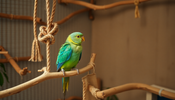
How to prevent boredom and problem behavior in birds
, by Fidello, 5 min reading time
, by Fidello, 5 min reading time
Many bird lovers underestimate how important mental stimulation and variety are for the well-being of their feathered companions. Boredom can lead to serious behavioral problems, such as excessive screaming, feather plucking, and even aggression. In this blog, you’ll learn how to prevent boredom in birds and avoid problem behavior.
Birds are generally intelligent animals with complex needs. In the wild, they spend a large part of their time foraging, engaging in social behavior, and performing other natural activities. When these stimuli disappear in a domestic environment, birds can quickly become bored.
This is especially true for popular pet birds such as parrots, parakeets, and canaries. These species are naturally very active and curious. Without sufficient mental challenges and variety in their environment, they can quickly develop problem behavior.
Boredom can manifest in different ways in birds. Some become excessively noisy and scream constantly. Others begin to harm themselves by feather plucking or other forms of self-injury. Aggressive behavior toward owners or other birds is also common.
In addition, boredom can lead to apathetic behavior, where the bird becomes lethargic and inactive. This may be less noticeable than screaming or aggression, but it is just as concerning for the animal’s well-being.
Although all birds benefit from mental stimulation, some species are at greater risk of boredom and problem behavior. Parrot species in particular, such as macaws, cockatoos, and African grey parrots, require a lot of attention and variety.
However, smaller parakeets, canaries, and other songbirds can also become bored quickly in a bare cage without toys or other stimuli. Even domestic pigeons, often seen as calm pets, can suffer from boredom if they do not receive enough challenge. At Fidello, you’ll find the best bird cages & aviaries for all bird species!
Boredom occurs when a bird does not receive enough mental and physical stimulation. This can be caused by a lack of activity as well as an environment or routine that is too monotonous.
In addition to physical movement, birds also need “mental movement.” They need to explore, discover, and learn. Without these stimuli, they quickly become bored and frustrated.
The difference between physical and mental boredom is that physical activity alone is not enough. A bird may fly around its cage a lot, but if there is nothing else to do, it will still become bored.
The most common behavioral problems caused by boredom are excessive noise, feather plucking, aggression, and apathy. Screaming and shrieking are ways for birds to seek attention. Feather plucking and self-injury often result from frustration.
Aggression is expressed through attacks on owners or other birds. Some birds, on the other hand, become very sluggish and apathetic, sitting in their cage without interest in their surroundings.
All of these behaviors are signals that the bird is bored and unable to fulfill its natural needs. With the right enrichment and variety in their environment, many of these problems can be prevented.
Enrichment means providing physical and mental stimuli that allow birds to express their natural behavior. This is essential for their well-being, as they otherwise become bored very quickly.
A bare cage does not provide sufficient stimulation. Birds need variety, challenges, and opportunities to explore and learn. By enriching their environment, they can satisfy their natural urge to forage, climb, and engage in social behavior.
The more a bird can express its natural behavior, the better its well-being. Enrichment is therefore crucial to preventing problem behavior and promoting the health and happiness of your feathered companion.
To prevent boredom and problem behavior, it is important to provide your bird with daily mental and physical challenges. Think of toys to climb on, puzzles to extract food from, and opportunities to forage.
In addition, social interaction with you as the owner or with other birds is essential. Birds are intelligent animals that need attention and stimulation. By regularly taking them out of the cage for play or training, you prevent them from becoming bored.
Finally, variety in the environment and routine is important. Regularly change the cage setup, rotate toys, and introduce new stimuli. This keeps your bird interested and active.
In practice, you can apply enrichment in many ways. For example, with swings, ladders, and other climbing structures. Food enrichment, or intelligence toys with space for food, stimulate natural foraging behavior.
Training and play are also excellent ways to mentally challenge your bird. Teach them tricks or let them search for rewards. This keeps them sharp and prevents boredom.
Rotate these forms of enrichment regularly. Birds quickly get used to a certain environment or routine. By continuously adding new stimuli, they remain interested and active.
Despite all your efforts, it may happen that your bird still develops problem behavior. In that case, it is wise to contact an avian veterinarian or a behavior specialist.
They can investigate the cause of the behavior and advise how to resolve it. Sometimes there is an underlying medical issue, or birds need extra guidance to restore their natural behavior.
First, try all possible forms of enrichment and variety yourself. But if the behavior persists or escalates, professional help is essential for the well-being of your feathered companion. To combat boredom, it’s important to place different types of enrichment in the bird cage. Find everything to fight boredom here.
With the right enrichment and variety in the environment, you can largely prevent boredom and problem behavior in birds. By offering daily mental and physical challenges, you stimulate their natural behavior and well-being.
Investing in your bird’s well-being truly pays off. You not only prevent behavioral problems, but also ensure that your companion enjoys a happy and healthy life. Discover the world of enrichment and make your bird happy!


