
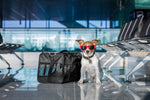
Flying with your dog in the cabin – everything you need to know for a smooth journey
, by Michael van Wassem, 7 min reading time
, by Michael van Wassem, 7 min reading time
More and more people are taking their dogs on vacation, and for good reason. For many, their dog is a full-fledged member of the family and is a welcome addition to their international travels. Fortunately, many airlines allow smaller dogs to travel in the cabin, close to their owners.
But before you enthusiastically book your tickets, it's important to do your research. Transporting dogs in the cabin comes with rules, restrictions, and practical matters you'll need to arrange. This blog post covers everything you need to know: from preparation and required documents to the rules of popular airlines like KLM and Transavia.
Please note: Rules are subject to change at any time. Therefore, always check the airline's official website for the most up-to-date information. No rights can be derived from this blog.
For small dogs, the cabin is often the safest, most comfortable, and least stressful way to fly. Your dog stays close to you, allowing you to keep a close eye on them and reassure them. Plus, you don't have to worry about extreme temperatures or loud noises in the hold.
Each company has its own terms and conditions, but in general the following guidelines apply:
Weight limit : the total weight of the dog plus transport bag may usually not exceed 8 to 10 kg.
Bag/kennel size : The dog must fit in a closed, soft-sided carrier that fits under the seat in front of you. Hard-sided kennels are generally not permitted in the cabin.
Health : Your dog must be healthy, not pregnant, not too young (usually at least 10-15 weeks old) and must not show aggressive behavior.
Travel documents : within Europe, a European pet passport with a valid rabies vaccination is required. Outside the EU, additional regulations often apply, such as blood tests, quarantine, or health certificates.
Not every breed is equally suitable for cabin travel. Small dogs such as Chihuahuas, Yorkshire Terriers, Miniature Poodles, and Pomeranians are often carried. Short-haired breeds or dogs with a calm temperament are often easier to transport than highly energetic or brachycephalic (short-nosed) breeds. Note: some airlines refuse short-nosed breeds due to respiratory risks.
Invest in an IATA-approved travel bag with ample ventilation, a waterproof base, and a comfortable interior. Let your dog get used to it in time.
Have your dog checked by the vet and make sure all vaccinations and microchip registrations are up to date. Ask for a health certificate if necessary, especially for flights outside of Europe.
Book your own flight first and then contact the airline directly to add your dog. Don't wait too long: there are often only a limited number of pets allowed per flight.
Feed your dog well before departure (at least 4 hours) so they're relaxed during the flight. Just before the flight, only give them water. Bring snacks and a collapsible water bowl along, but only open the bag during the flight if permitted.
Make sure your dog is well-exercised and relaxed. Consider using calming sprays or a calming jacket (such as a ThunderShirt), but never administer medication without consulting a veterinarian.
KLM allows small dogs in the cabin, under strict conditions:
Maximum weight : 8 kg including bag.
Bag dimensions : maximum 46cm long x 28cm wide x 24cm high.
Allowed in : Economy Class and Business Class within Europe. Not permitted on intercontinental Business Class flights.
Dog must remain in bag : You are not allowed to open the bag during the flight.
Cost : between €75 and €400 per one-way trip, depending on destination.
Number per flight : limited, so booking early is crucial.
Transavia is a popular choice for flights within Europe. Their policy is as follows:
Maximum weight : 10 kg including bag.
Bag dimensions : maximum 47 x 30 x 27 cm.
Dog must fit completely into bag : and must remain in bag throughout the flight.
Cost : €45 per one-way trip.
Not allowed on all destinations : no pets on flights to the UK, Ireland or United Arab Emirates.
Reservations : you can make a reservation up to 2 hours before departure via 'My Transavia', but it's full when it's full.
Kennel Training : Start training your dog to feel comfortable in the carrier weeks in advance.
Avoid overheating : Fly preferably early in the morning or late in the evening, especially in summer.
Use a GPS tracker : For extra peace of mind, especially if your dog ever gets loose while traveling.
Leash and harness : Keep your dog in a well-fitting harness throughout the entire day of travel, including at the airport.
Poop bags and wipes : Always handy for quickly cleaning up accidents.
While it's nice to have your dog with you in the cabin, there are also drawbacks:
The limited space can cause unrest in active dogs.
Some dogs do become stressed by strange smells, sounds and movements.
Not all destinations or airlines allow pets in the cabin.
Booking your dog is relatively expensive.
If your dog is too large, it must be transported as checked baggage or cargo. This requires a sturdy, approved carrier and additional preparations. Not every airline offers this option, and it's recommended to only choose airlines with extensive experience in pet transportation.
Check here everything you need for safe flying with your dog .


